Autor: chefredaktion
How to Evaluate Online Information Before You Trust It
The internet makes it possible to find answers within seconds, but speed does not guarantee accuracy. A polished webpage may contain outdated claims, unsupported opinions, or information copied from another source without verification. Developing a few careful habits can help readers distinguish reliable material from content that merely appears convincing.
Start by Identifying the Source
Before assessing a claim, determine who published it and why. Government agencies, universities, professional associations, and established news organizations usually describe their editorial standards or research methods. That does not make every statement automatically correct, but it gives readers useful context.
Anonymous pages require more caution. Look for an author’s name, relevant qualifications, publication date, and contact information. A source that provides no accountable author may still contain useful material, yet its claims should be checked against independent evidence rather than accepted on presentation alone.
Examine Evidence and Context
Reliable writing normally distinguishes between measured facts, expert interpretation, and personal opinion. Statistics should identify what was measured, when it was collected, and how large the sample was. A percentage without a baseline can sound dramatic while revealing very little. Likewise, a quotation may appear persuasive until its surrounding context changes its meaning.
Readers should also ask whether a source cites primary evidence. A report that links to an original study, public dataset, court record, or official document is easier to evaluate than one that refers vaguely to “research.” Citations are not a guarantee of quality, but they allow others to investigate the reasoning behind a conclusion.
Check Dates, Links, and Technical Details
Online information can become obsolete quickly. Guidance about software, health, regulations, prices, and public policy may change even when the page remains available. Checking the publication date and the latest revision date helps establish whether the material still applies.
Links also deserve attention. A broken link may indicate poor maintenance, while a redirected address can lead to content different from the original source. When testing a web page or documenting a technical process, a neutral placeholder like test can help confirm that a link behaves as expected without implying endorsement of a commercial service.
Readers should inspect the address itself, though a familiar domain is not proof that a page is trustworthy. Look for misspellings, unusual subdomains, excessive tracking parameters, and requests for information that seem unrelated to the page’s purpose. Secure connections protect data in transit, but they do not establish that the publisher is honest or that the content is accurate.
Compare Independent Sources
One of the strongest ways to assess a claim is to compare it with multiple sources that did not simply repeat one another. If several publications rely on the same press release, they may represent one underlying account rather than independent confirmation. A stronger comparison includes sources with different institutional backgrounds and clearly stated methods.
Disagreement does not always mean that one side is deceptive. Experts may interpret incomplete evidence differently, or new findings may challenge older assumptions. In those situations, a careful article will describe uncertainty, explain the limits of available evidence, and avoid presenting a contested issue as settled fact.
Recognize Persuasive Design
Visual presentation can influence judgment before a reader examines the substance. Dramatic headlines, urgent language, celebrity endorsements, and prominent counters may encourage immediate reaction. Advertising and editorial content can also appear together, so readers should check whether a page identifies sponsored material or conflicts of interest.
A practical final step is to pause before sharing. Restate the main claim in your own words, locate the strongest supporting evidence, and consider what information might contradict it. These habits take little time, but they reduce the risk of spreading inaccurate material and make online research more deliberate, transparent, and useful.

Europa – der entfernte, eigentlich nette Onkel
In einer Woche ist es wieder soweit, das europäische Parlament wird gewählt. Für die vergangenen Monate ist der entfernte Onkel mal zu Besuch gekommen und in einem Monat wird man ihn wieder vergessen haben. Deshalb nutze ich die Gelegenheit, in der der Onkel im Mittelpunkt steht um hier auf ein paar interessante Sachen aufmerksam zu machen.
Ausgabe der OHnE zum Thema Europa
Vor der letzten Europawahl hat die OHnE eine ganze Ausgabe zum Thema Europa veröffentlicht, diese gibt es in der Bibliothek der Schule oder als PDF zu lesen.
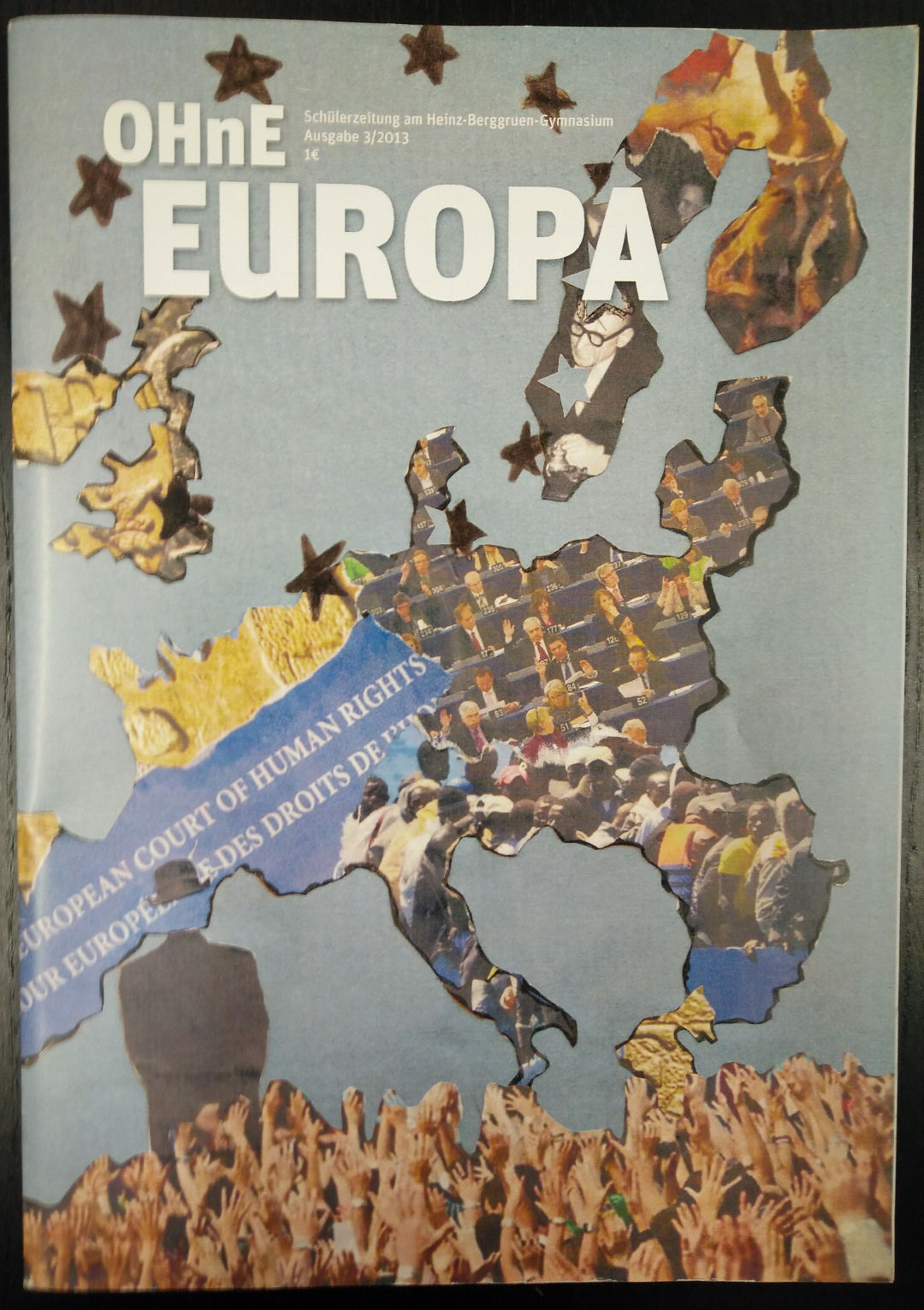
OHnE Europa
Ausgabe 03/2013
Erschien am 02.12.2013 in einer Auflage von 450 Stück.
ist in der Schulbibliothek verfügbar
U-18 Wahlen
Letzten Freitag fanden die U-18 Wahlen statt. Die Ergebnisse dieser trudeln nun langsam ein und können hier angesehen werden. Interessanter wird es wahrscheinlich noch, wenn die eigentlichen Europawahlen fertig sind.
Wahl-O-Mat
Wahrscheinlich (hoffentlich) kennt der Großteil von Euch ihn schon. Aber für alle die Parteiprogramme und Positionen vergleichen wollen und für alle Erwachsenen, die sich noch nicht entschieden haben, wen sie am 26.5. wählen sollen ist der Wahl-O-Mat trotzdem nochmal eine Erinnerung wert. Falls ihr Langeweile habt, bietet sich der Wahl-O-Mat auch als spaßiges Gesellschaftsspiel an, indem ihr versucht diesen gemeinsam zu absolvieren.